
Aesop
Brand Cathedrals

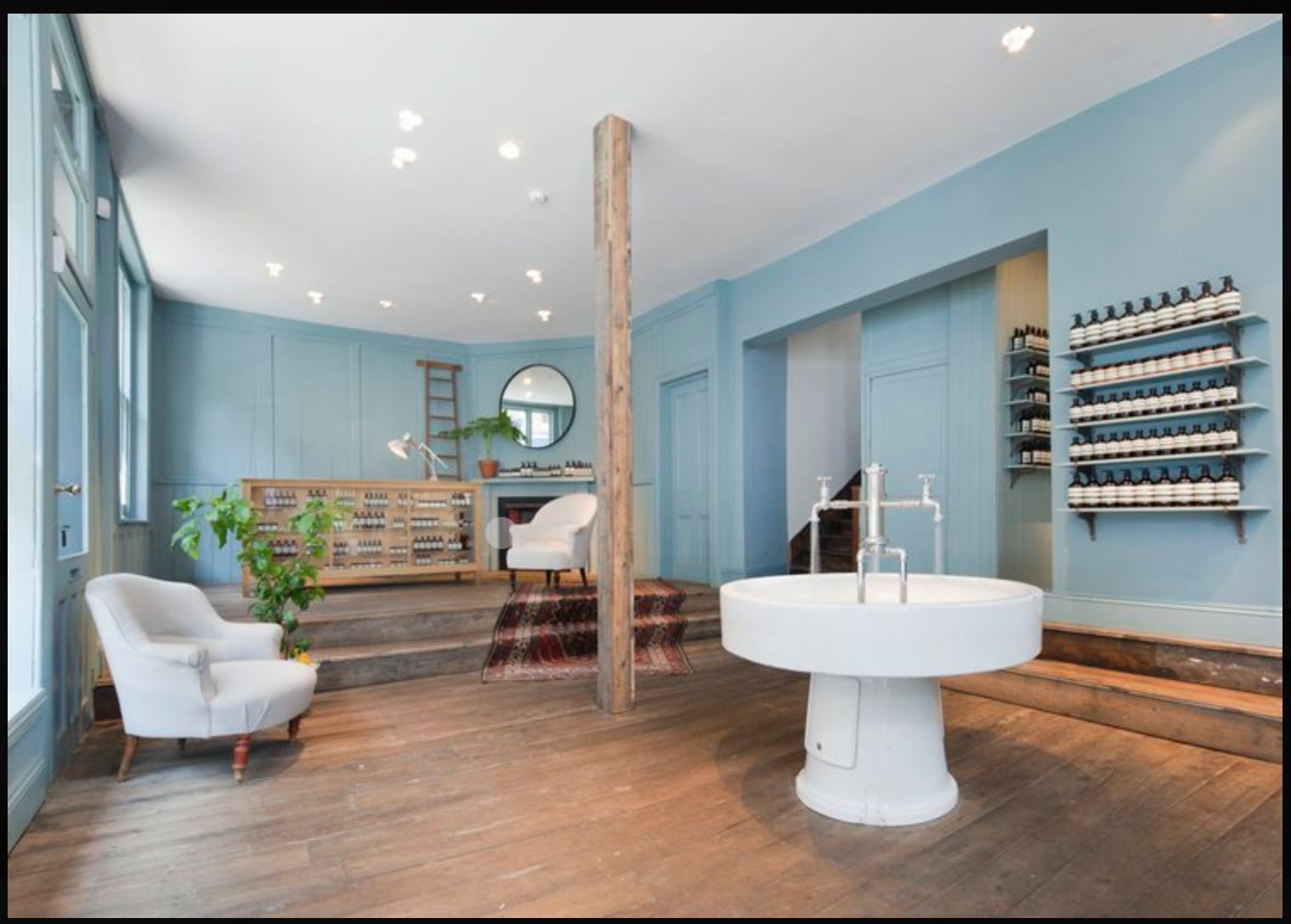
Choosing where to open your stores is a crucial marketing decision. In some sectors there are obvious places - usually where competitors are already; in London high end menswear has (still) to be on Jermyn Street and furniture on Tottenham Court Road.
But increasingly the location choice for your stores matches the customers who congregate there - often drawn by brands with a similar customer base. A great example is London's Lambs Conduit Street - full of quirky independent stores and restaurants, with one or two carefully chosen bigger brands. Including Aesop.
Aesop does Location Location Location really well. This Australian luxury skincare brand has built a cult following driven by their stores; they don’t advertise and only open stores in the right neighbourhood. They do this so well a friend who travels a lot will always look up the local Aesop stores to help find the interesting areas in new cities.
Asked about their general approach to picking the right spot for a new store, their GM said;
It’s a combination of science and gut. There’s a standard method most retailers use of taking information about people in an area: average incomes, education and things like where they go on holiday.
But then, you just follow everybody else and it might not be right for you. We also use a lot of intuitive, gut feeling. Everyone from our retail, marketing and even the finance departments contribute to where we open stores. The guys at [fashion brand] Acne say ‘we open stores where we like to hang out’.
In London they were very early on Broadway Market, Borough Market and their story of opening on Shoreditch iconic Redchurch Street, before it became so popular, shows their smart thinking.
They capitalise on finding the right locations by working with local talent to make the stores fit the district. In London they used Finch for both Redchurch Street and Broadway Market - but whilst the Broadway Market store is fitted out in Cherry wood, the Shoreditch one uses rough hewn oak and zinc.
For the Nolita store - opened in 2011 - New York-based architect Jeremy Barbour used 2,800 copies of the New York Times cut into strips then stacked and bound for wall cladding.
The business was launched in 1987 then acquired by Brazilian retailer Natura - who also own Avon and the Body Shop - in 2012. Between 2012 and 2022, gross sales increased from US$28 million to US$537 million. The number of stores and counters increased from 52 to 395 as Aesop expanded its geographic footprint from 8 markets to 29
And earlier this year L’Oreal bought Aesop for $2.5 billion. We are starting to see some subtle changes in strategy; stores are opening in more commercial, higher traffic locations. But they still in areas with the right vibe - Cold Drops Yard, Regent Street, the Marais in Paris and Shanghai’s Dongping Road. They are also investing heavily to develop their online business, drawing upon L’Oreal expertise in ecommerce.
Aesop epitomises what we call Brand Cathedrals - stores where you go to worship the brand, even if you are not buying. Watch the constant flow of people at any of their stores nipping in to try the samplers.
A great retail presence still has a purpose and, done well, enhances the business. But the right location, the right fit out and the right staff are crucial. Firms like Appear Here- who have worked with Aesop - can help you try retail out and we always recommend experimentation.